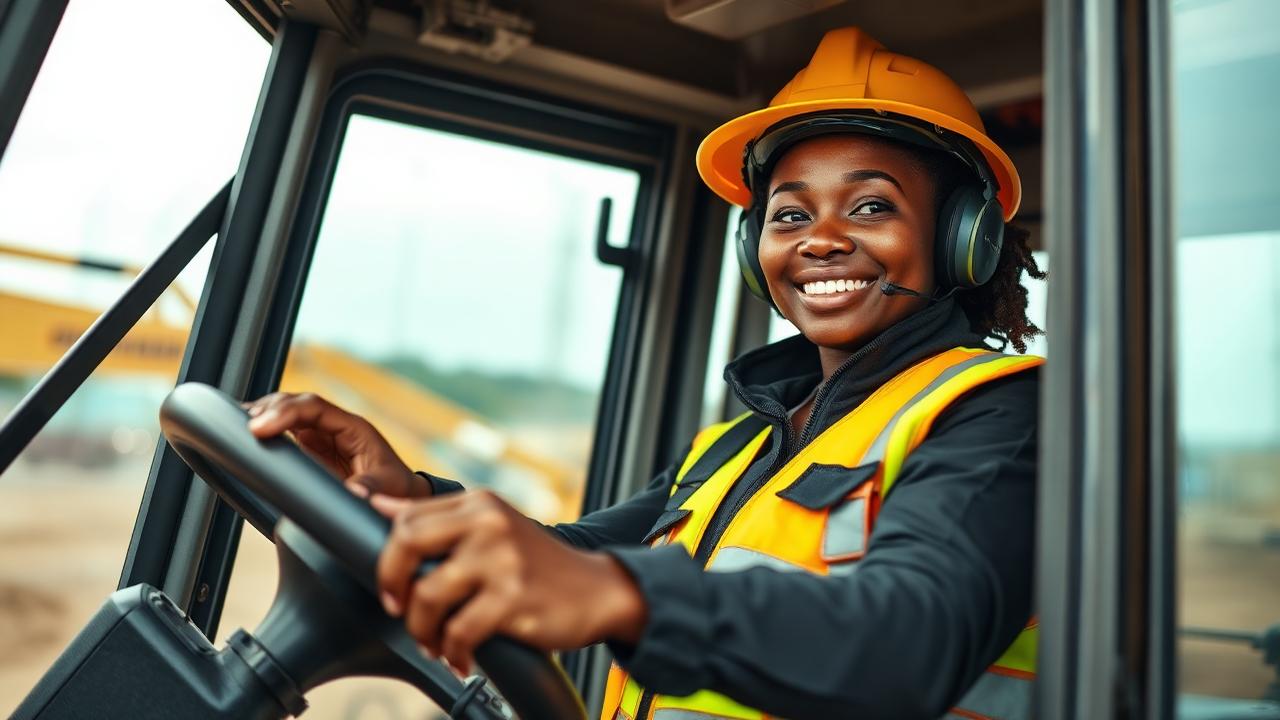
For decades, the construction and heavy machinery industries have been predominantly male domains. But across Kenya, a new generation of women is challenging stereotypes, operating excavators, cranes, and bulldozers with skill and confidence. These trailblazers are not just breaking barriers—they're redefining what's possible in plant operation and engineering.
Challenging Stereotypes, One Machine at a Time
The assumption that heavy machinery operation is "men's work" has no basis in reality. Operating equipment requires skill, precision, spatial awareness, and decision-making abilities—qualities that have nothing to do with gender. Women operators consistently demonstrate excellence in these areas, often bringing unique strengths to the field.
Meet Grace Wanjiku: From Classroom to Construction Site
Grace Wanjiku never imagined herself operating a 20-ton excavator. After completing her secondary education, she sought training that would provide stable employment and financial independence. Despite skepticism from family and friends, she enrolled in IPMTTI's plant operator program.
"The first time I climbed into an excavator cabin, I was terrified. But my instructors believed in me, and I believed in myself. Now, three years later, I'm leading excavation projects for a major construction company in Nairobi. I earn a good salary, support my family, and love what I do."
Grace's story is increasingly common. Women are discovering that heavy machinery operation offers career opportunities that many traditional fields cannot match—competitive salaries, job security, and clear advancement paths.
Jane Akinyi: Engineering Excellence
Jane Akinyi pursued electrical installation training at IPMTTI, becoming one of the few female electricians in her county. Her precision and attention to detail quickly earned her a reputation for excellence. Today, she runs her own electrical contracting business, employing both men and women.
"People would doubt my abilities until they saw my work. Now, clients specifically request me because they know I deliver quality. Being a woman in this field has actually become an advantage—I stand out, and my work speaks for itself."
The Advantages Women Bring
Industry professionals are recognizing that gender diversity brings tangible benefits to construction and machinery operations:
- Attention to Detail: Women operators often demonstrate meticulous attention to safety checks and equipment maintenance
- Communication Skills: Effective communication reduces accidents and improves team coordination
- Patience and Precision: Qualities essential for complex operations and delicate work
- Problem-Solving: Fresh perspectives lead to innovative solutions
- Team Dynamics: Mixed-gender teams often demonstrate better collaboration and morale
Overcoming Challenges
Despite progress, women in heavy machinery and construction still face challenges. These include:
- Initial skepticism from male colleagues and supervisors
- Lack of appropriate facilities on some construction sites
- Family and social pressure to pursue "traditional" careers
- Limited female role models in the industry
However, each woman who succeeds makes the path easier for those who follow. Employers are increasingly recognizing the value of gender diversity and creating more inclusive work environments.
Mary Njeri: Welding Against the Odds
Mary Njeri faced significant opposition when she decided to pursue welding and fabrication training. "My mother thought I was crazy," she recalls with a laugh. "But I was determined to learn a trade that would give me independence."
Today, Mary operates a successful metal fabrication workshop in Nakuru, creating custom products for construction projects and individual clients. She's also training two female apprentices, passing on her skills and confidence to the next generation.
IPMTTI's Commitment to Gender Equality
At IPMTTI, we actively encourage and support women pursuing careers in technical fields. Our approach includes:
- Gender-neutral recruitment and training practices
- Female role models among our instructors and staff
- Mentorship programs connecting female students with industry professionals
- Flexible training schedules accommodating family responsibilities
- Partnering with employers committed to workplace equality
The Economic Case for Gender Diversity
Kenya's construction and manufacturing sectors face significant skilled labor shortages. By excluding half the population from consideration, the industry limits its talent pool and potential growth. Women represent an untapped resource of capable, motivated workers ready to fill these critical roles.
Companies that embrace gender diversity benefit from:
- Access to wider talent pools
- Improved company reputation and culture
- Better problem-solving through diverse perspectives
- Enhanced employee retention and satisfaction
Looking Forward
The future of Kenya's construction, manufacturing, and heavy machinery industries will be built by skilled workers—regardless of gender. As more women enter these fields, they're proving that capability, not gender, determines success.
Young women considering technical training should know: these careers offer financial independence, professional respect, and personal satisfaction. The path may not always be easy, but it's increasingly clear that it's open to anyone with determination and willingness to learn.
Conclusion
Women breaking barriers in heavy machinery and engineering aren't just building careers—they're building a more inclusive, capable, and prosperous Kenya. Every woman who climbs into an excavator cabin, strikes a welding arc, or installs electrical systems challenges outdated stereotypes and inspires others to follow.
The question is no longer whether women can succeed in these fields. The question is: what's stopping you from starting your journey today?
Share this article
Ready to Start Your Journey?
Discover how IPMTTI can help you achieve your career goals with industry-recognized training programs.
Explore Our Programs